
JKKP Certification for Air Receiver Tanks in Malaysia: A Complete Guide
What every Malaysian factory owner needs to know about JKKP (DOSH) certification of air receiver tanks — legal requirements, inspection intervals, safety valve calibration and how to stay compliant.
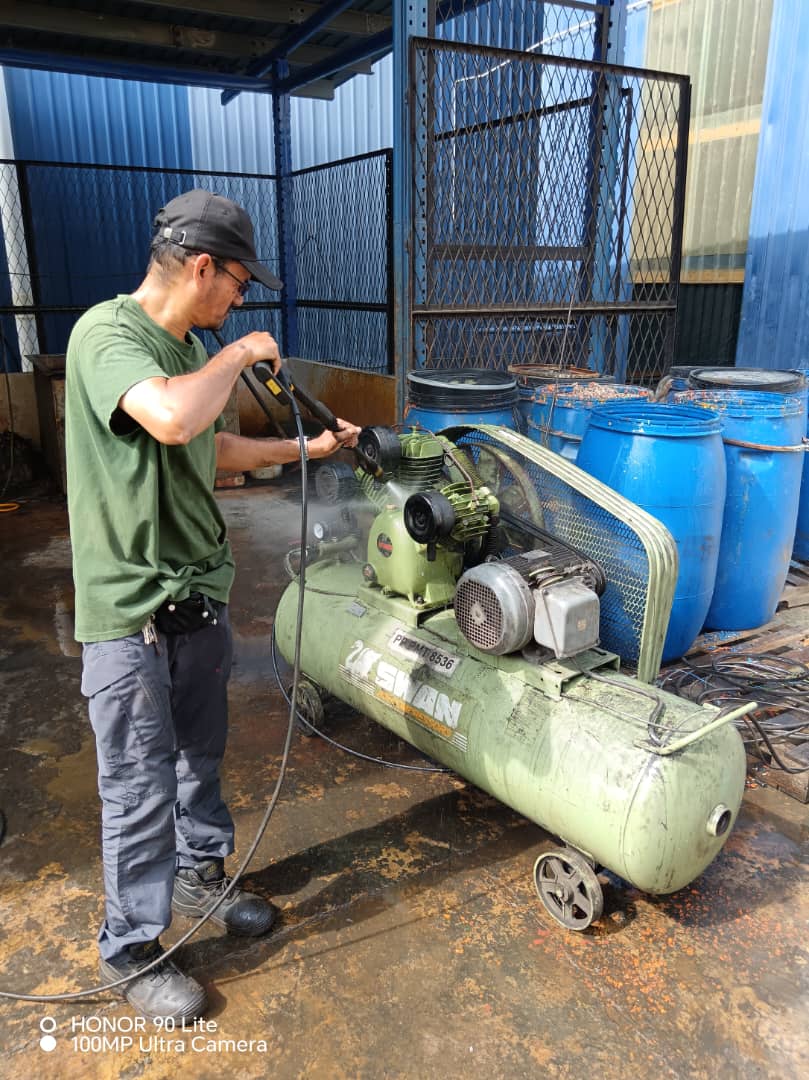
If your factory operates an air compressor in Malaysia, the air receiver tank attached to it is legally classified as a pressure vessel — and pressure vessels must be certified and inspected by JKKP (Jabatan Keselamatan dan Kesihatan Pekerjaan), also known as DOSH (Department of Occupational Safety and Health). Running an uncertified or expired tank is not just a safety risk — it's an offence under the Factories and Machinery Act 1967 that can shut down your production line and trigger heavy fines.
After nearly four decades supplying and servicing air receiver tanks across Penang and northern Malaysia, we've helped hundreds of factories get their tanks certified, recertified and brought back into compliance. This guide explains the legal framework, the certification process, what inspectors look for, and how Jim Services supports you at every stage.
What Is JKKP and Why Does It Regulate Air Receiver Tanks?
JKKP / DOSH enforces the Factories and Machinery Act 1967 (Act 139) and the Occupational Safety and Health Act 1994 (Act 514). Under the Factories and Machinery (Steam Boiler and Unfired Pressure Vessel) Regulations 1970, every unfired pressure vessel — including air receiver tanks above a certain size/pressure — must be registered with JKKP, inspected, and issued a Certificate of Fitness (CF) before it can be operated.
Air receiver tanks store compressed air at high pressure. A poorly maintained or corroded tank can rupture violently, causing serious injury, equipment damage and downtime. The certification regime exists to make sure every tank in service has been designed, fabricated, installed and maintained to a verifiable standard.
Which Air Receiver Tanks Need JKKP Certification?
In general, an air receiver tank requires JKKP registration and a Certificate of Fitness when the product of its internal volume (litres) and working pressure (bar) exceeds the threshold defined in the regulations. In practice this catches the overwhelming majority of industrial receiver tanks — typically anything from 150 L upwards at 7–10 bar.
- Vertical and horizontal air receiver tanks attached to screw, piston or scroll compressors
- Secondary / buffer tanks installed downstream for surge protection
- Wet and dry receiver tanks in dryer / filter trains
- Replacement tanks installed during compressor upgrades
When in doubt, register it
Operating an unregistered pressure vessel is an offence. If you are unsure whether a tank needs JKKP certification, send us its nameplate (volume, design pressure, manufacturer) and we'll confirm before you install it.
The JKKP Certification Process — Step by Step
1. Design Approval & Manufacturer Documentation
Before a new tank can be installed, the manufacturer must supply a complete data pack: design calculations, material certificates (mill certificates for the shell and dished ends), welding procedure and welder qualification records, NDT (non-destructive testing) reports, hydrostatic test certificates, and the manufacturer's data report. Jim Services only supplies receiver tanks that come with this full documentation pack ready for JKKP submission.
2. Registration (Form JKJ 105) and First Inspection
The owner — or Jim Services on the owner's behalf — submits Form JKJ 105 to the state JKKP office together with the design pack. A JKKP inspector then visits the site for the first inspection: visual examination, verification of nameplate data, hydrostatic test if required, and inspection of safety fittings (pressure gauge, safety valve, drain valve).
3. Certificate of Fitness (CF / PMA)
Once the inspector is satisfied, JKKP issues a Certificate of Fitness (Perakuan Kelayakan, PMA). This certificate must be displayed at the tank and is typically valid for 15 months. The tank cannot legally be operated without a current CF.
4. Periodic Re-inspection
Air receiver tanks are re-inspected by JKKP every 15 months. Re-inspection includes external visual examination, internal inspection (the tank must be opened, cleaned and dried), thickness measurement at corrosion-prone points, and recertification of safety fittings. A new CF is issued on successful inspection.
Safety Valve and Pressure Gauge Calibration
JKKP inspectors will not renew a Certificate of Fitness if the safety valve and pressure gauge are not properly calibrated. These two devices are the tank's last line of defence — the safety valve must lift at or below the design pressure, and the gauge must read accurately so operators can spot abnormal conditions.
- Safety valves should be tested and recalibrated at every JKKP re-inspection cycle (typically every 15 months)
- Replacement is recommended when seats are corroded, leaking or the set pressure drifts
- Pressure gauges should be calibrated against a traceable reference and replaced if the needle is sticking, fogged or out of tolerance
Jim Services provides safety valve calibration and replacement, pressure gauge calibration, and a full servicing report that is accepted by JKKP inspectors. We can synchronise this work with your 15-month re-inspection to minimise downtime.
What Inspectors Check During Re-inspection
- Shell and dished-end thickness — measured with ultrasonic gauges, compared to original design
- Internal corrosion, pitting and condensate accumulation
- Condition of welds and any signs of cracking
- Nameplate legibility and match against the JKKP register
- Safety valve set pressure and seat integrity
- Pressure gauge accuracy and visibility
- Drain valve operation and absence of standing water
- Foundation, anchoring and clearance around the tank
Common Reasons a Tank Fails JKKP Inspection
- Excessive internal corrosion from undrained condensate — the single most common failure
- Safety valve stuck, leaking, or set above the design pressure
- Faulty or unreadable pressure gauge
- Missing or modified nameplate
- Unauthorised welding or modification of the shell
- Lapsed certificate operated beyond the 15-month window
Drain your tank daily
The cheapest way to extend the life of an air receiver tank is to drain condensate daily — manually or with an automatic drain. Standing water is the root cause of most internal corrosion failures.
How Jim Services Helps You Stay Compliant
As a Penang-based air compressor specialist since 1985, we handle the entire JKKP lifecycle for our customers:
- Supply of JKKP-ready air receiver tanks with full manufacturer documentation
- Form JKJ 105 submission and liaison with the state JKKP office
- Pre-inspection servicing — internal cleaning, NDT, safety valve and gauge recalibration
- Replacement of expired safety valves and out-of-tolerance pressure gauges
- Servicing report formatted for JKKP submission
- Scheduling reminders so your 15-month re-inspection never lapses
Book a Compliance Check
If you're unsure whether your air receiver tank is currently certified, when its next JKKP inspection is due, or whether its safety valve is still within calibration — get in touch. We'll review your existing certificate, inspect the tank on site, and quote any servicing or replacement work needed to keep you compliant.
Free compliance check
WhatsApp Silas Tan at 017-590 0474 or Jim Services Sales Team at 018-264 6199 — or call 04-506 0978 — and we'll arrange a free on-site compliance check for your air receiver tank.
Related Articles
How to Choose the Right Air Compressor for Your Factory: A Complete Buyer's Guide
The exact 7-step process our engineers use during free site surveys — from calculating CFM to evaluating total cost of ownership.
Read article: How to Choose the Right Air Compressor for Your Factory: A Complete Buyer's Guide ComparisonsVSD vs Fixed Speed Air Compressors: Which One Saves More Energy?
How each technology actually works, when to choose which, and a real Penang factory calculation showing RM 13,000+ in annual savings.
Read article: VSD vs Fixed Speed Air Compressors: Which One Saves More Energy?Ready To Talk To An Expert?
Free site survey and honest, jargon-free recommendations.