
Compressed Air Piping Design: Layout, Sizing & the Pressure Drop Problem
A practical piping guide for Malaysian factories — ring mains, pipe sizing, take-off points, materials and avoiding the pressure drop that costs you energy.
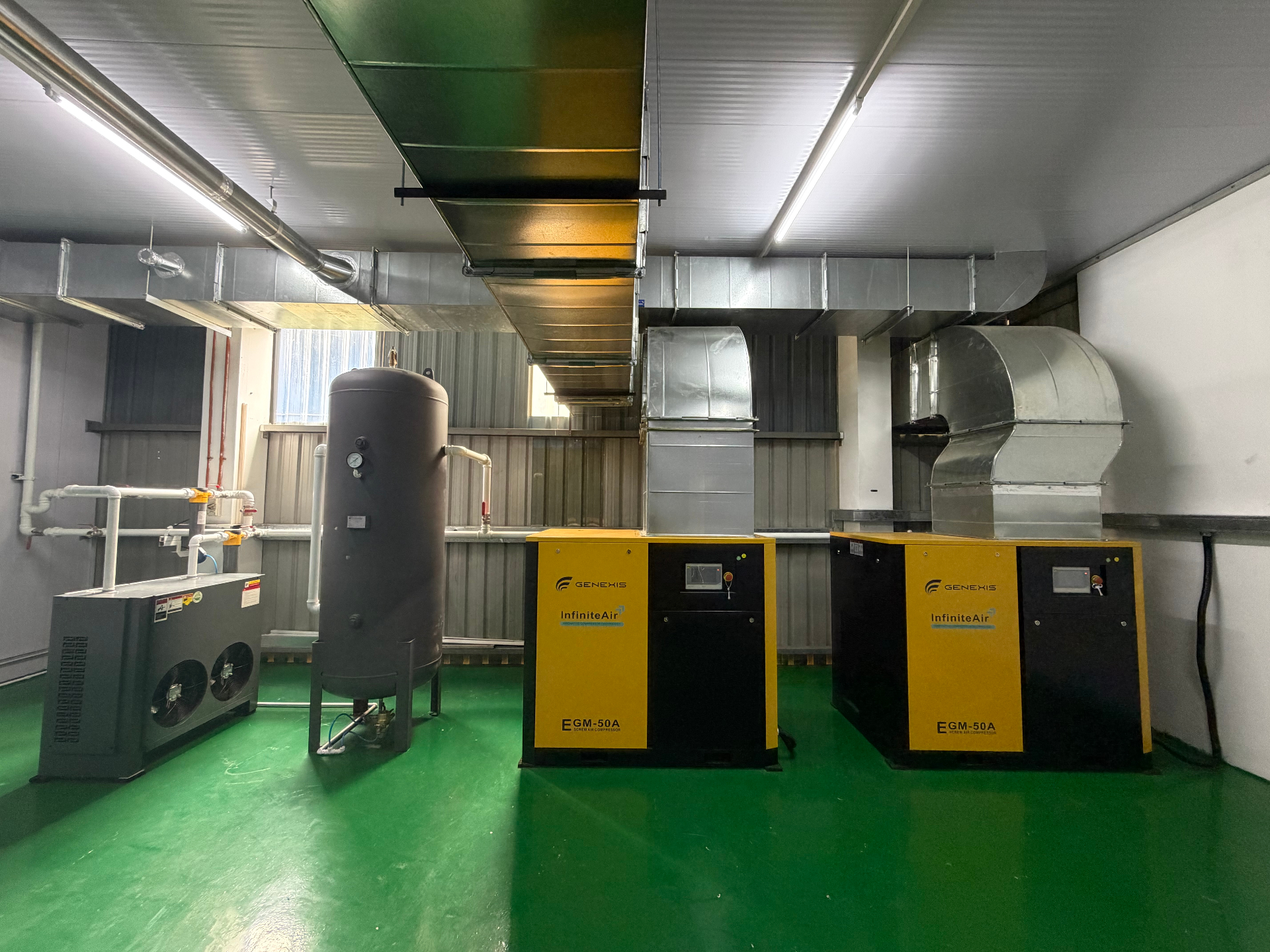
Factories agonise over which compressor to buy, then connect it with whatever pipe was lying around. The result: a premium machine feeding a piping system that throttles it. Piping is the delivery network for the most expensive utility in your plant — and poor design quietly taxes every cubic metre of air that flows through it. Here's how to get it right.
The Enemy: Pressure Drop
Pressure drop is the pressure lost between your compressor and your tools, caused by friction and restriction in the piping. It matters because of one brutal equation:
- If your machines need 6 bar and your piping loses 1 bar along the way, you must run the compressor at 7 bar
- Every extra bar of system pressure increases compressor energy consumption by roughly 6–8%
- So a badly designed pipe run doesn't just inconvenience one machine — it raises the electricity cost of your entire system, every hour, forever
A well-designed system keeps total pressure drop from compressor to point of use to a fraction of a bar. A bad one loses a bar or more — often the invisible reason a "correctly sized" compressor can't hold pressure at the far end of the plant.
What Causes Pressure Drop
- Undersized pipe — the biggest offender. Air forced through too-small pipe loses pressure fast, and the loss grows steeply with flow
- Long, meandering runs — every metre adds friction
- Elbows, tees and fittings — each sharp 90° elbow adds the equivalent of metres of pipe; sweeping bends are far kinder
- Undersized or clogged filters and dryers — treatment components have their own pressure drop, which grows as elements clog
- Quick-couplings and small hoses at point of use — a beautiful main ruined by a skinny final hose is a classic
- Corrosion and scale inside old steel pipe — the pipe's effective bore shrinks over the years
Ring Main vs Branch: Choosing a Layout
Branch (dead-end) layout
A main line with branches running to each user, like a tree.
- Cheaper and simpler to install
- But air reaches distant users down a single path: the further the user, the bigger the pressure drop, and heavy use upstream starves everyone downstream
Ring main (loop) layout
The main line forms a closed loop around the production area, with take-offs around the ring.
- Air reaches every point from two directions, halving the effective distance and dramatically reducing pressure drop
- Sections can be isolated with valves for maintenance without shutting down the whole plant
- The standard recommendation for any serious factory floor
For most industrial installations, a ring main around the production area with branch drops to machines is the right answer.
Design Rules That Matter
- Size generously. Pipe is cheap compared to years of energy loss — going one size up on the main is one of the best-value decisions in the whole system. It also builds in capacity for future growth
- Take-offs from the top of the pipe. Water travels along the bottom of horizontal pipes; branching from the top keeps condensate out of your machines. This one detail separates professional installations from DIY ones
- Slope horizontal runs slightly toward drain points, with drain legs at low points to collect and remove water
- Isolation valves on each branch and ring section — so one repair doesn't stop the whole factory
- Keep it high and protected — overhead runs keep pipe away from forklift damage and free up floor space
- Minimise fittings — plan straight runs; every avoided elbow is free pressure
Pipe Materials: What to Use
- Aluminium modular piping — today's preferred choice for new installations: smooth bore (low friction), corrosion-free, light, fast to install and easy to modify later
- Galvanised or black steel — traditional and strong, but heavier to install and steel corrodes internally over time, shedding rust into your air and shrinking the bore
- Stainless steel — for oil-free, F&B, pharma and other high-purity applications where contamination from the pipe itself is unacceptable
- PPR / engineered plastics — used in some settings, but must be genuinely rated for compressed air
- Never PVC. Standard PVC pipe is not rated for compressed air and fails by shattering — it's a recognised safety hazard, not a budget option
If you're installing an oil-free system into old oil-contaminated steel pipe, the piping must be replaced or properly cleaned — otherwise the pipe re-contaminates the clean air you paid a premium for.
Signs Your Existing Piping Is Costing You
- Pressure fine near the compressor, weak at the far end of the plant
- You've turned system pressure up over the years "to compensate"
- Water arriving at tools despite a working dryer
- Rust particles in filters and point-of-use equipment
- Pressure dips whenever a big machine upstream kicks in
Any of these, and the piping — not the compressor — is likely your bottleneck.
Piping Is Part of Every System We Install
Our installations include full piping design and installation — layout, sizing, materials, drain legs and isolation valves — engineered together with the compressor, tank and dryer so the air that leaves the machine actually arrives at your tools. If your existing system shows the signs above, a free site survey will find where the pressure is going.
Get your piping assessed
WhatsApp Jim Services Sales Team at 018-264 6199 or call 04-506 0978. We're at No.11A, Lengkok IKS Simpang Ampat 1, Taman IKS Simpang Ampat, 14100 Simpang Ampat, Pulau Pinang.
Frequently Asked Questions
Why does pressure drop in compressed air piping matter?
Every extra bar of system pressure needed to overcome pressure drop increases compressor energy consumption by roughly 6–8%. A badly designed pipe run therefore raises the electricity cost of the entire system continuously.
What causes pressure drop in compressed air piping?
Undersized pipe is the biggest cause, followed by long meandering runs, sharp elbows and excess fittings, undersized or clogged filters and dryers, small hoses and quick-couplings at the point of use, and corrosion or scale narrowing old steel pipe.
Is a ring main better than a branch layout for compressed air?
Yes for most factories. A ring main feeds every take-off point from two directions, halving the effective distance and reducing pressure drop, and lets sections be isolated for maintenance without stopping the plant.
What is the best pipe material for compressed air?
Aluminium modular piping is the preferred choice for new installations — smooth bore, corrosion-free, light and easy to modify. Stainless steel suits oil-free, F&B and pharma systems. Standard PVC must never be used, as it fails by shattering.
Why should branch take-offs come from the top of the pipe?
Condensate travels along the bottom of horizontal pipes, so branching from the top keeps water out of machines and tools. Horizontal runs should also slope slightly toward drain legs at low points.
What pipe size should I use for compressed air?
Size generously and one size up on the main where in doubt — pipe is cheap compared with years of energy loss, and the extra bore lowers pressure drop while leaving capacity for future expansion.
How do I know if my existing piping is costing me money?
Warning signs are good pressure near the compressor but weak pressure at the far end of the plant, system pressure turned up over the years to compensate, water reaching tools despite a working dryer, rust in filters, and pressure dips when a large machine starts.
Can I reuse old steel piping for an oil-free compressor?
Not as-is. Old oil-contaminated steel pipe will re-contaminate the clean air an oil-free machine produces, so the piping must be replaced or professionally cleaned to preserve the air quality you paid for.
Related Articles
How to Choose the Right Air Compressor for Your Factory: A Complete Buyer's Guide
The exact 7-step process our engineers use during free site surveys — from calculating CFM to evaluating total cost of ownership.
Read article: How to Choose the Right Air Compressor for Your Factory: A Complete Buyer's Guide ComparisonsVSD vs Fixed Speed Air Compressors: Which One Saves More Energy?
How each technology actually works, when to choose which, and a real Penang factory calculation showing RM 13,000+ in annual savings.
Read article: VSD vs Fixed Speed Air Compressors: Which One Saves More Energy?Ready To Talk To An Expert?
Free site survey and honest, jargon-free recommendations.