
The Hidden Cost of Compressed Air Leaks (and How to Find Them)
Why air leaks are the biggest invisible expense in most factories — real cost examples, detection methods, and a practical leak-management programme.
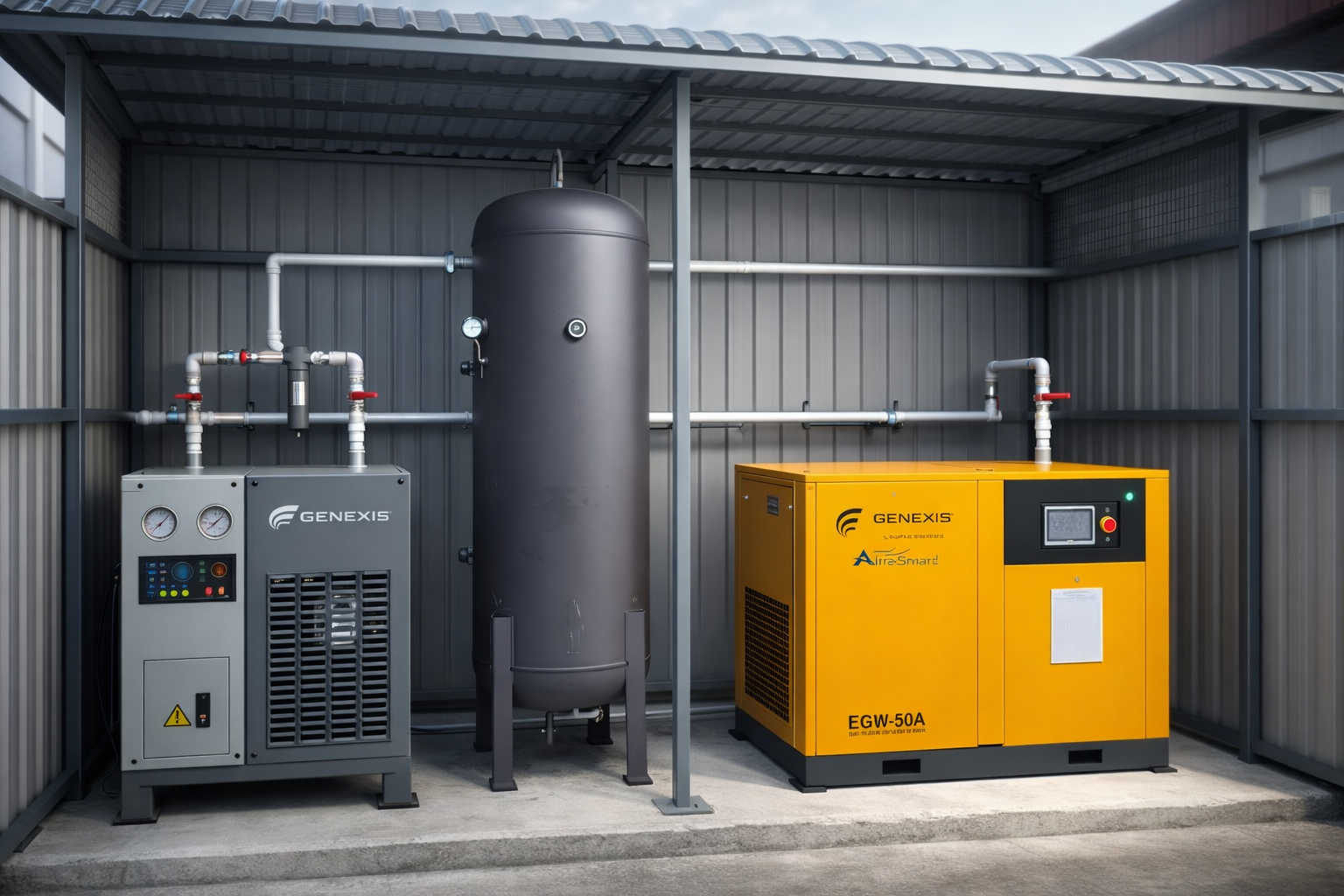
Walk through almost any factory that's been running for a few years and you'll hear it if you listen closely between shifts: a faint, constant hiss. That sound is money leaving your building. Compressed air leaks are the single largest invisible expense in most air systems — and because the compressor quietly works harder to compensate, most owners never notice until an audit puts a number on it.
Why Leaks Cost So Much More Than You'd Think
Compressed air is one of the most expensive utilities in your factory. By the time air reaches your tools, you've paid for the electricity to compress it, dry it, filter it and push it through your piping — and most of that electrical energy is lost as heat along the way. Every litre that escapes through a leak carries all of that cost with it, for zero output.
The industry reality: in factories without an active leak programme, it's common for 20–30% of all compressed air generated to be lost to leaks. In neglected systems it can be worse. That means for every RM 10,000 on your compressor's electricity bill, RM 2,000–3,000 may be buying air that never does any work.
And leaks run 24 hours a day — including nights, weekends and shutdowns, whenever the system stays pressurised.
The Compounding Effects
The direct energy waste is only the first cost. Leaks also cause:
- Pressure drop at your machines — operators respond by turning up the system pressure, which increases energy use across the entire system and makes every leak leak faster
- Extra compressor running hours — more wear, earlier services, shorter machine life
- Short cycling — constant pressure loss forces frequent load/unload cycles
- Phantom capacity problems — factories buy a bigger compressor to fix low pressure that was really a leak problem all along. We've seen it more than once
- Overworked dryers and filters — every leaked litre was dried and filtered first
Where Leaks Hide
Leaks cluster in predictable places:
- Fittings, couplings and connectors — by far the most common
- Quick-disconnects and hose ends — worn seals leak constantly
- Flexible hoses — cracked, aged or abraded
- Valves — worn seats and gland packing
- Condensate drains — stuck-open drains are basically deliberate leaks
- Old thread sealant and pipe joints — especially in ageing piping
- Equipment left connected but unused — a retired machine still plumbed in leaks forever
A single 3 mm hole at typical factory pressure wastes air worth thousands of ringgit per year — and most factories don't have one leak, they have dozens of small ones.
How to Find Leaks
The simple methods
- Listen during quiet hours — with production stopped but the system pressurised, larger leaks are audible
- Soapy water on suspect joints — bubbles mark the leak
- The shutdown test: pressurise the system, switch off the compressor, and watch how fast pressure falls with nothing running. A fast drop means significant leakage
The professional method
Ultrasonic leak detection. Leaks emit ultrasound that detectors pinpoint even in a noisy running factory — finding the small, inaudible leaks that add up to the real losses. This is the core of a professional air audit, which tags every leak, estimates its cost, and prioritises repairs by payback.
Fixing Leaks Is a Programme, Not a Project
Here's the uncomfortable truth: fix every leak today, and in a year new ones will have appeared. Seals age, hoses wear, fittings loosen. The factories that keep leakage low treat it as routine:
- Quarterly walk-down with a listen-and-soap check by your own staff
- Annual professional ultrasonic audit with data logging to measure system-wide loss
- Tag-and-fix discipline — every found leak gets tagged, logged and repaired, not "noted"
- Disconnect unused equipment at the isolation valve, not just at the machine
- Fix drains — replace failed auto-drains promptly
The payback maths is rarely close: leak repairs are typically the cheapest energy savings available anywhere in a factory, often paying back in weeks.
Put a Number on Your Leaks
Our energy efficiency audits with data logging measure exactly how much air — and money — your system is losing, locate the leaks, and give you a prioritised repair list with real ringgit figures attached. It's the fastest way to cut your compressed air bill without buying anything new.
Book an air audit
WhatsApp Jim Services Sales Team at 018-264 6199 or call 04-506 0978. We're at No.11A, Lengkok IKS Simpang Ampat 1, Taman IKS Simpang Ampat, 14100 Simpang Ampat, Pulau Pinang.
Frequently Asked Questions
How much compressed air is lost to leaks?
In factories without an active leak programme, it is common for 20–30% of all compressed air generated to be lost to leaks. Neglected systems can be worse, and leaks run 24 hours a day whenever the system stays pressurised.
How much does a compressed air leak cost per year?
A single 3 mm hole at typical factory pressure wastes air worth thousands of ringgit a year. Most factories do not have one leak but dozens of small ones, which is why total leakage often reaches a fifth to a third of the compressor's electricity bill.
How do I find compressed air leaks?
Simple methods include listening during quiet hours, applying soapy water to suspect joints, and a shutdown pressure-decay test. The professional method is ultrasonic leak detection, which pinpoints small leaks even in a noisy running factory.
Where do compressed air leaks usually occur?
Most leaks are at fittings, couplings and connectors, quick-disconnects and hose ends, aged flexible hoses, worn valves, stuck-open condensate drains, old pipe joints, and equipment left connected but unused.
What other problems do air leaks cause besides wasted energy?
Leaks cause pressure drop at machines (prompting operators to raise system pressure, which wastes more energy), extra compressor running hours and wear, short cycling, overworked dryers and filters, and phantom capacity problems where a bigger compressor is bought to fix what was really a leak problem.
Is fixing air leaks worth the cost?
Leak repairs are typically the cheapest energy savings available in a factory, often paying back within weeks. Because leaks reappear as seals and hoses age, the best results come from a routine programme rather than a one-off fix.
How often should a factory check for air leaks?
A quarterly listen-and-soap walk-down by in-house staff plus an annual professional ultrasonic audit with data logging keeps leakage low. Every leak found should be tagged, logged and repaired rather than just noted.
What does a compressed air audit include?
An energy efficiency audit with data logging measures actual system demand and losses, locates and tags leaks with ultrasonic detection, estimates the cost of each, and returns a prioritised repair list with ringgit figures attached.
Related Articles
How to Choose the Right Air Compressor for Your Factory: A Complete Buyer's Guide
The exact 7-step process our engineers use during free site surveys — from calculating CFM to evaluating total cost of ownership.
Read article: How to Choose the Right Air Compressor for Your Factory: A Complete Buyer's Guide ComparisonsVSD vs Fixed Speed Air Compressors: Which One Saves More Energy?
How each technology actually works, when to choose which, and a real Penang factory calculation showing RM 13,000+ in annual savings.
Read article: VSD vs Fixed Speed Air Compressors: Which One Saves More Energy?Ready To Talk To An Expert?
Free site survey and honest, jargon-free recommendations.