
Do You Need an Air Dryer? The Compressed Air Moisture Guide for Malaysian Factories
Why Malaysia's humidity puts water in every compressed air line — the damage it causes, refrigerated vs desiccant dryers, and how to size one correctly.
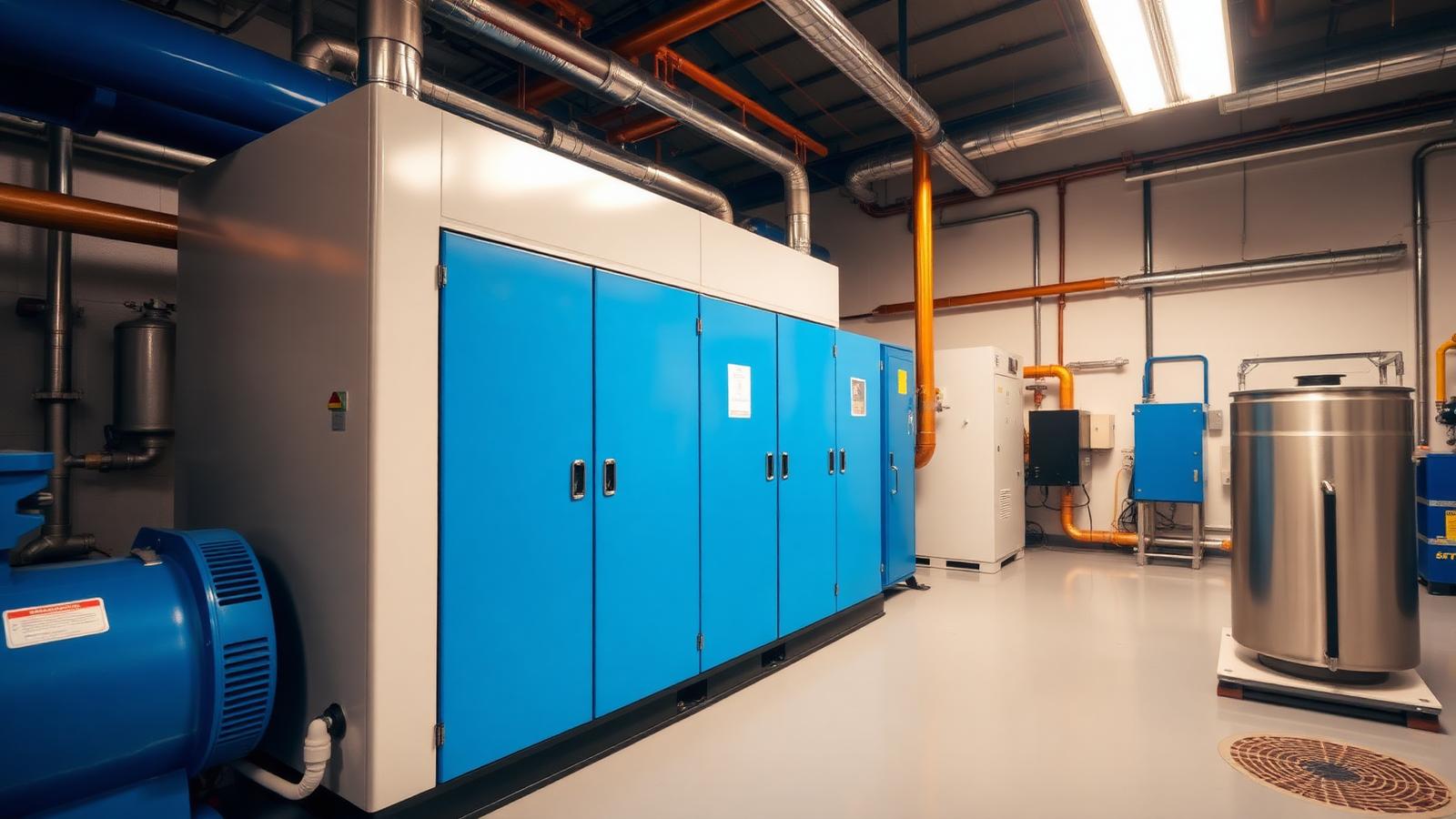
If you've ever found water dripping from your air tools, rust in your piping, or spoiled products on your line, the culprit is almost always the same: moisture in your compressed air. And in Malaysia's tropical climate, it's not a question of if your compressed air contains water — it's how much, and what you're doing about it.
This guide explains why compressed air is naturally wet, the real damage moisture causes, and how to choose the right air dryer for your factory.
Why Compressed Air Always Contains Water
The air around us holds water vapour — and in Malaysia, with humidity often above 80%, it holds a lot. When a compressor draws in that humid air and compresses it, the water vapour gets concentrated. As the compressed air then cools in your tank and piping, that vapour condenses into liquid water.
The result: water in your air lines, tools and products — unless you remove it.
This is why compressor buyers in dry, temperate countries can sometimes get away with minimal air treatment, but Malaysian factories almost never can. Our climate makes an air dryer essential, not optional.
The Real Damage Moisture Causes
Untreated wet air isn't just a nuisance — it costs money in ways that add up fast:
- Corrosion and rust inside your piping, tank and tools, shortening equipment life
- Damaged pneumatic tools and valves that seize, jam or wear out early
- Spoiled products — especially in food & beverage, pharmaceuticals, painting and coating
- Poor paint and coating finishes with blistering, fisheyes and inconsistent spray
- Frozen air lines in refrigerated or outdoor sections
- Contaminated final products in electronics and precision manufacturing
- Higher maintenance costs across the whole system
For many factories, the cost of one batch of ruined product exceeds the price of a dryer.
What Is a Dew Point (and Why It Matters)
The key measurement for dry air is dew point — the temperature at which water starts to condense out of the compressed air. The lower the dew point, the drier the air.
- If your dew point is higher than your ambient or line temperature, water will condense in your system.
- Different applications need different dew points — general factory use needs less aggressive drying than, say, pharmaceutical or electronics work.
Choosing the right dryer is really about achieving the dew point your process requires.
The Two Main Types of Air Dryer
Refrigerated Air Dryers
The most common choice for general industrial use. They work by cooling the compressed air to condense out water, then draining it away.
- Best for: the majority of Malaysian factories — general manufacturing, workshops, pneumatic tools, packaging
- Pros: cost-effective, low running cost, low maintenance, reliable
- Consideration: in Malaysia's heat, a dryer needs a robust condenser design to hold a stable dew point — a dual-fan condenser helps maintain performance in high ambient temperatures
Desiccant Air Dryers
These use moisture-absorbing material to achieve a much lower dew point — very dry air.
- Best for: applications needing extremely dry air — electronics, semiconductors, pharmaceuticals, critical instrumentation, or outdoor/cold lines
- Pros: achieves very low dew points refrigerated dryers can't reach
- Consideration: higher cost and running cost; used where the process genuinely demands ultra-dry air
The simple rule
Most factories are well served by a quality refrigerated dryer. Choose desiccant only when your process specifically demands very low dew points.
Don't Forget: A Dryer Is Part of a System
An air dryer works best alongside the rest of your air treatment:
- Air receiver tank — allows air to cool and initial water to drop out before the dryer
- Filters — remove particulates, oil aerosols and finer contaminants
- Oil-water separators & condensate management — handle the water and oil the system drains away legally and cleanly
Buying a dryer in isolation — without matching it to your compressor size and treatment chain — often leads to poor results. The whole system needs to be sized together.
How to Size an Air Dryer
A dryer must match your compressor's air flow and your working pressure. Get it wrong and you either:
- Undersize it — air moves through too fast to dry properly, and moisture gets through
- Oversize it — you pay more upfront and in running cost than needed
Proper sizing accounts for your compressor's output, working pressure, ambient temperature and the dew point your process needs. This is exactly what a site survey determines — it's not a guess you want to make from a spec sheet alone.
Signs You Need a Dryer (or a Better One)
- Water dripping from tools, hoses or drain points
- Rust forming inside piping or the receiver tank
- Inconsistent paint or coating finishes
- Product contamination or spoilage
- An existing dryer that can't keep up on hot days (a sign it's undersized or failing)
Get the Right Dryer for Your Factory
Our engineers size and supply refrigerated and desiccant dryers — plus filters, tanks and condensate management — as a complete, matched air treatment system built for Malaysia's climate. A free site survey determines exactly what your process needs.
Talk to a specialist
WhatsApp 018-264 6199 or call 04-506 0978. Visit us at No.11A, Lengkok IKS Simpang Ampat 1, Taman IKS Simpang Ampat, 14100 Simpang Ampat, Pulau Pinang.
Related Articles
How to Choose the Right Air Compressor for Your Factory: A Complete Buyer's Guide
The exact 7-step process our engineers use during free site surveys — from calculating CFM to evaluating total cost of ownership.
Read article: How to Choose the Right Air Compressor for Your Factory: A Complete Buyer's Guide ComparisonsVSD vs Fixed Speed Air Compressors: Which One Saves More Energy?
How each technology actually works, when to choose which, and a real Penang factory calculation showing RM 13,000+ in annual savings.
Read article: VSD vs Fixed Speed Air Compressors: Which One Saves More Energy?Ready To Talk To An Expert?
Free site survey and honest, jargon-free recommendations.